HVAC Installation in the Bay Area – Designing The Perfect System
When homeowners think about installing a new heating or cooling system, they may picture a technician bringing in an air conditioner or heat pump and connecting it to the home. In reality, professional HVAC installation is much more involved. A properly designed system requires an understanding of the home’s size, construction, insulation, windows, airflow, ductwork, climate and the way occupants use different spaces.
That is why air conditioning installation in the Bay Area should involve more than simply choosing a unit based on the square footage of a home. The goal is to design a complete system that delivers the right amount of heating and cooling while operating efficiently and maintaining consistent comfort throughout the house.
Why HVAC System Sizing Matters
One of the most important parts of HVAC installation in the Bay Area is determining the appropriate equipment capacity. Bigger does not necessarily mean better when it comes to heating and cooling equipment.
An oversized air conditioner or heat pump may reach the thermostat setting quickly and shut off before adequately removing humidity or providing consistent circulation. A system that is too small may run continuously while struggling to keep up with the home’s heating and cooling demands.
Professional HVAC design considers factors such as square footage, ceiling height, insulation, window size and orientation, air leakage, occupancy and the local climate. These variables help determine how much heating and cooling capacity the home actually requires.
Designing Ductwork for Proper Airflow
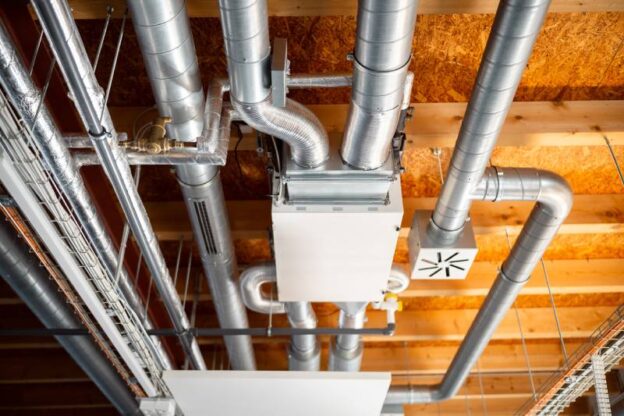
Equipment is only one part of the equation. The ductwork is essentially the distribution network that moves conditioned air throughout the home. If ducts are poorly sized, improperly routed or inadequately sealed, even a high-efficiency HVAC system may not perform as expected.
During a professional Bay Area HVAC installation, ductwork may need to be designed or modified to account for the amount of air each room requires. Supply registers need to deliver sufficient airflow, while return-air pathways need to allow the system to circulate air effectively.
Duct size, length, bends and transitions all create resistance to airflow. Excessive resistance can make the blower work harder, reduce efficiency and contribute to rooms that are noticeably hotter or colder than others.
Designing for the Bay Area Climate
The Bay Area presents unique HVAC challenges because conditions can vary dramatically from one location to another. Coastal homes, inland properties and homes in the hills can experience very different temperature patterns.
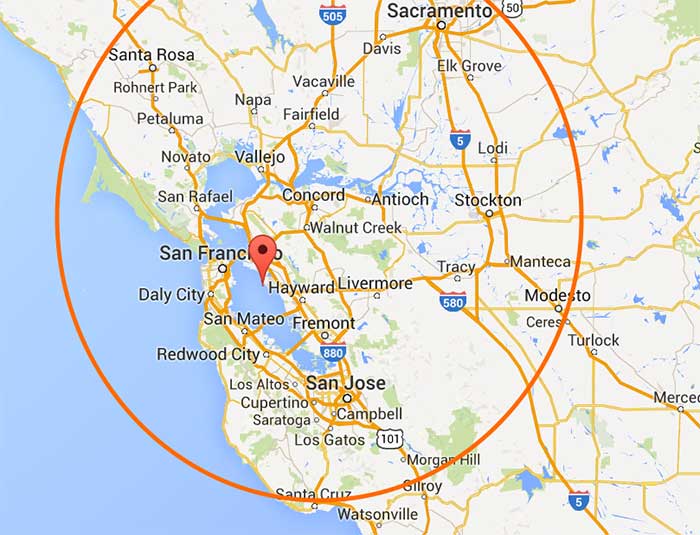
A successful HVAC design therefore considers the individual home rather than relying on a one-size-fits-all approach. In some houses, central air conditioning may make sense. In others, a ductless mini-split or heat pump may provide better performance, particularly when existing ductwork is limited or nonexistent. Element Home Solutions installs heat pumps, mini-splits, furnaces, air conditioners and ductwork systems throughout the Bay Area.
Professional Bay Area HVAC Installation Makes a Difference
The science behind HVAC installation ultimately comes down to matching the equipment and air distribution system to the home. Proper sizing, duct design, airflow and equipment placement can all affect comfort, efficiency and long-term performance.
If you are considering air conditioning installation in the Bay Area, replacing an aging heating and cooling system or planning a complete Bay Area HVAC installation, Element Home Solutions can evaluate your home and help determine the right approach.
A properly designed HVAC system is not simply a piece of equipment. It is an engineered comfort system designed around the unique characteristics of your home.